Your Ad-Free Subscription Is Working Correctly
You paid to remove the adverts. Amazon removed the ones other people paid for.
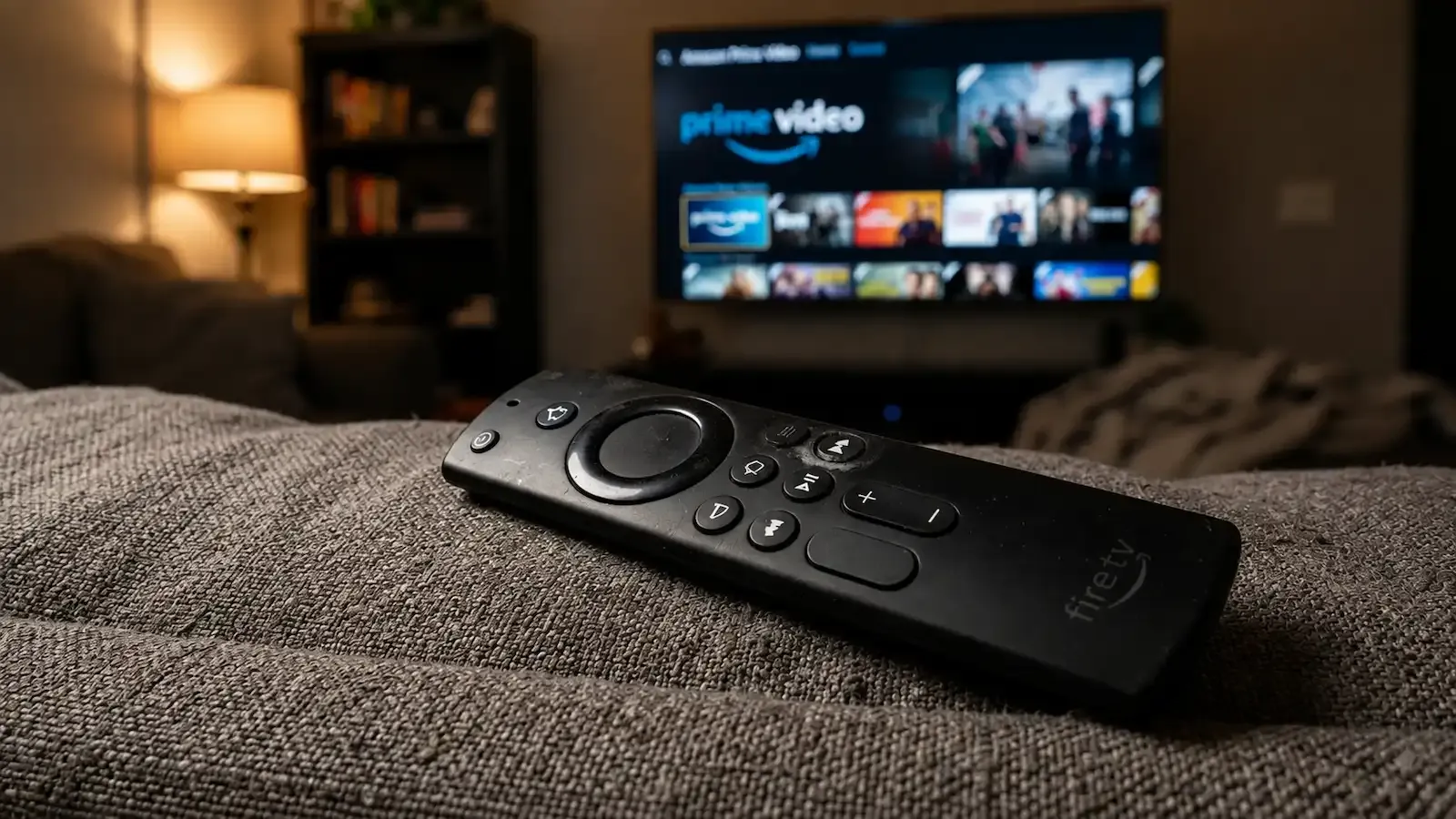
We regret to inform you that the ad-free tier of Prime Video shows adverts, and that when you report this, Amazon will run a diagnostic and find nothing wrong. There is nothing wrong. You paid to remove advertising, and Amazon removed the advertising other people pay for. Its own stays, on the grounds that it is not advertising when Amazon does it: a footnote on the help page (opens in a new tab) says promotional trailers “can be skipped but can’t be removed with Prime Video Ad Free.” You did not read the footnote. Neither did we, and it is our job.
The word on the page that takes your money is “ad-free.” The word on the page that explains what you bought is “most.” Amazon uses both, about the same product, in that order: money first, vocabulary later.
What the footnote says
The sign-up page promises no advertisements on Prime’s films and shows. Then it counts the exceptions — live TV, titles labeled “with ads”, add-on channels — and, in a second footnote, for anyone who finished the first, the trailers in front of “some titles.” A second help page, What is Prime Video Ad Free? (opens in a new tab), says you can watch most of the catalog without interruptions. The checkout says ad-free. The help page says most. The distance between the two words is one payment.
The email to members, as 9to5Google quoted it (opens in a new tab), promised streaming “without interruptions,” which is true if you do not count the interruptions. Trailers appear in none of Amazon’s announcements, only on the help page, which you visit after you have paid, because that is when you first want to.
What the chat confirmed
A subscriber asked, and posted the answer (opens in a new tab). In the screenshot, Amazon’s support chat finds the subscription working correctly and explains the customer is seeing “Amazon promotional material (not ads)”: trailers for other Prime Video shows, four to sixteen seconds each. It had the duration ready. It removes commercials from brands and outside companies; “It does NOT remove Amazon’s own promotional content.” The capitals are in the script.
Before you write in to say a trailer is not an advert: correct, and Amazon agrees with you, which is the problem. An advert is a slot Amazon sells. A promo is a slot Amazon keeps. From the sofa they are the same sixteen seconds, and you will press skip too early, and it will not take, and you will press it again, harder, which has never worked and which you will do tomorrow.
What not seeing them costs
Announcing the adverts (opens in a new tab) in September 2023, Amazon promised “meaningfully fewer ads than linear TV” and priced the way out at $2.99 a month. In April the way out became Prime Video Ultra (opens in a new tab): $4.99 a month, or $45.99 a year, with 4K reserved for those paying it, so the tier for not seeing things is also the tier for seeing them properly. We have it. We are not proud.
Meanwhile, according to Adweek (opens in a new tab), the ad load on the tier you did not pay for crept up to “four to six minutes per hour.” The adverts doubled, the price of not seeing them went up two dollars, and what you bought removes neither the sport nor the trailer. You are paying forty-six dollars a year to avoid sixteen seconds, and you would like someone to tell you that is reasonable. It is not. We did it too, annually, for the discount.
Where the word came from
The class action, since you were about to mention it, lost. A federal judge in Seattle dismissed it (opens in a new tab) last July, with prejudice: putting adverts into Prime Video “was not a price increase; it was a benefit modification” the terms allowed, and expecting the service to stay ad-free was not reasonable, given what you agreed to, at some point, by not cancelling. A court in Munich went the other way (opens in a new tab) in December — Amazon could change which films it offered, not whether they came with adverts — and that judgment is not final. Neither case was about the trailers, which remain where Amazon put them: in a footnote, undefeated.
It is not even Amazon’s phrasing. In 2024 Sky’s NOW, in Britain, was selling an ad-free upgrade whose small print read “Ad-free excludes live channels and trailers promoting NOW content” — the same words. When the Advertising Standards Authority (opens in a new tab) upheld a complaint against NOW that July, over whether its cheaper plans’ adverts were disclosed, it said viewers would treat the presence of ads as “a main characteristic of the service.” The industry agrees, which is why it is in the footnote, in the type size the industry reserves for true things.
You were not foolish to think the word meant the word. It did, once: before January 2024 there was nothing to remove, so nothing to pay for. Then it grew a definitions section, and the definitions section is where the adverts went. The diagnostic found nothing wrong. That was the complaint.
Receipts
- Prime Video help — Sign Up to Go Ad Free (opens in a new tab)
- Prime Video help — What is Prime Video Ad Free? (opens in a new tab)
- About Amazon — Prime Video’s Ad Free subscription is now Prime Video Ultra (March 2026) (opens in a new tab)
- About Amazon — Amazon shares an update on Prime Video, introduces limited ads (September 2023) (opens in a new tab)
- Adweek — Amazon Doubles Ad Load on Prime Video (June 2025) (opens in a new tab)
- In re Amazon Prime Video Litigation, W.D. Wash. No. 2:24-cv-186, order of July 16, 2025 (opens in a new tab)
- Landgericht München I, press release 13/2025, case 33 O 3266/24 (opens in a new tab)
- ASA ruling A24-1240257, Sky UK Ltd t/a NOW (July 2024) (opens in a new tab)